

AP Cabinet declares 2025 as a year of people-centric governance
The Cabinet noted that the Super Six welfare initiatives emerged as a defining feature of governance in 2025, providing direct and timely support to crores of citizens
image for illustrative purpose
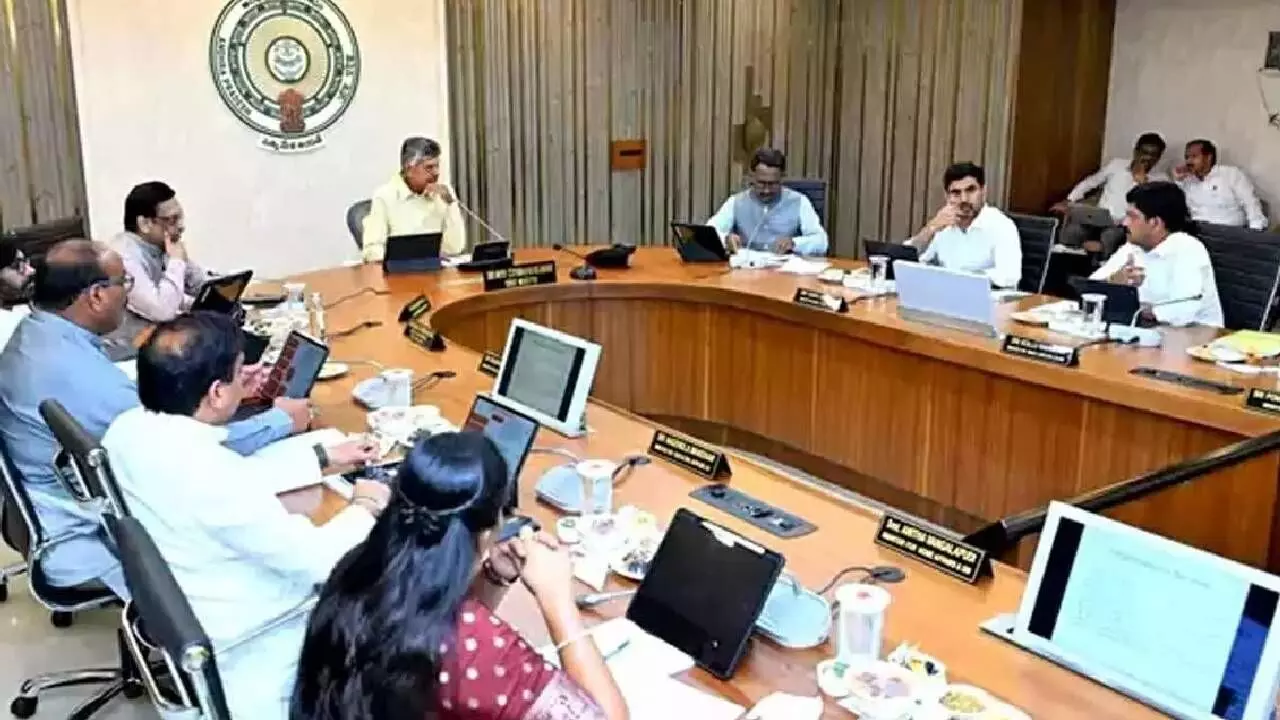
Amaravati: The State Cabinet, which met on Monday here, undertook a comprehensive review of the Coalition Government’s performance in 2025 and announced that the year marked a clear shift towards people-centric, responsive and result-oriented governance.
The Cabinet observed that welfare delivery, economic growth, infrastructure creation and administrative reforms progressed in parallel, reflecting the government’s focus on inclusive development and efficient execution.
The Cabinet noted that the Super Six welfare initiatives emerged as a defining feature of governance in 2025, providing direct and timely support to crores of citizens. Under Thalliki Vandanam, financial assistance amounting to Rs10,090 crore was extended to 67.27 lakh students, significantly strengthening access to education. The Stree Shakti free bus travel scheme for women, launched on August 15, enabled safe and affordable mobility and recorded more than 3.25 crore journeys, with an expenditure of Rs1,144 crore so far. Free bus travel facilities for persons with disabilities and the portability of pension benefits across locations further enhanced dignity and inclusion for vulnerable sections.
Reviewing rural and agricultural initiatives, the Cabinet stated that farmers remained at the core of policy interventions throughout the year. Through Annadata Sukhibhava, Rs6,310 crore was directly credited into the accounts of 46 lakh farmers, ensuring income support and financial stability. The Deepam–2 scheme provided three free LPG cylinders per household annually, with nearly two crore cylinders distributed at a cost of Rs2,684 crore. Pension support under NTR Bharosa crossed Rs50,000 crore in cumulative outlay, with annual disbursements of Rs33,000 crore, offering dependable social security. Dedicated schemes for fishermen, auto drivers and the urban poor further strengthened livelihood assurance across sectors.
The Cabinet highlighted that social justice and inclusive growth remained guiding principles of governance in 2025. An allocation of Rs3,670 crore was made towards minority welfare during the year. Honorariums and financial assistance for priests, imams, mouzzins, pastors, traditional service communities and junior lawyers were enhanced, reflecting the government’s commitment to social equity. Reforms in welfare delivery mechanisms ensured that benefits reached eligible citizens without discrimination, reinforcing social harmony and trust.
Education and healthcare saw renewed focus through structural reforms and targeted investments. The Cabinet recalled that the approval of the Mega DSC, taken up as the Chief Minister’s first official decision, enabled the recruitment of 15,941 teachers, addressing long-pending vacancies. The completion of recruitment for 5,757 police constables strengthened public safety, with stipends increased substantially. Health and nutrition programmes covered nearly 75 lakh students from Class 1 to Intermediate through regular health check-ups and preventive care. Additional medical seats created under public-private partnership models expanded access to professional education for students from economically weaker backgrounds.





